



What Taylor Swift Can Teach us About Experience Design
David Waingarten, Creative Director of Strategy, discusses three things the modern office can learn from today’s experience economy.
The experience economy has transformed our way of life, and industries are evolving to meet the moment. Across sectors and spaces, we’re seeing more experiential cross-pollination—design that blends the experiences you’d expect from one place into another.
Examples include:
• Sports venue design following hotel and airline trends by replacing general fan seating with luxury suites and club houses
• U2’s residency at The Sphere and Taylor Swift’s Eras Tour blending music with spectacle to create highly immersive digital storytelling
• Cars looking like smartphones, meeting our expectation that all digital interfaces feel like the ones we carry with us all day
• Hotels and corporate real estate incorporating more digital art and immersive interactive installations, making lobbies feel like art galleries
We’re learning that the life forms that survive and thrive best are those that borrow from other environments. What can workplace design learn from this to provide more inspiring and engaging spaces for employees?
1. Choose emotion over technology
Few people understand how the technology of The Sphere in Las Vegas actually works, but anyone who’s seen a show there can tell you how it feels. Workplaces too can offer rich, communal experiences; however, they often focus on infrastructure and office technology as solutions to human needs.
To design spaces people want to be in, we need to prioritize their emotional and professional needs—not audiovisual diagrams and screen specs.
2. Create purposeful, welcoming spaces
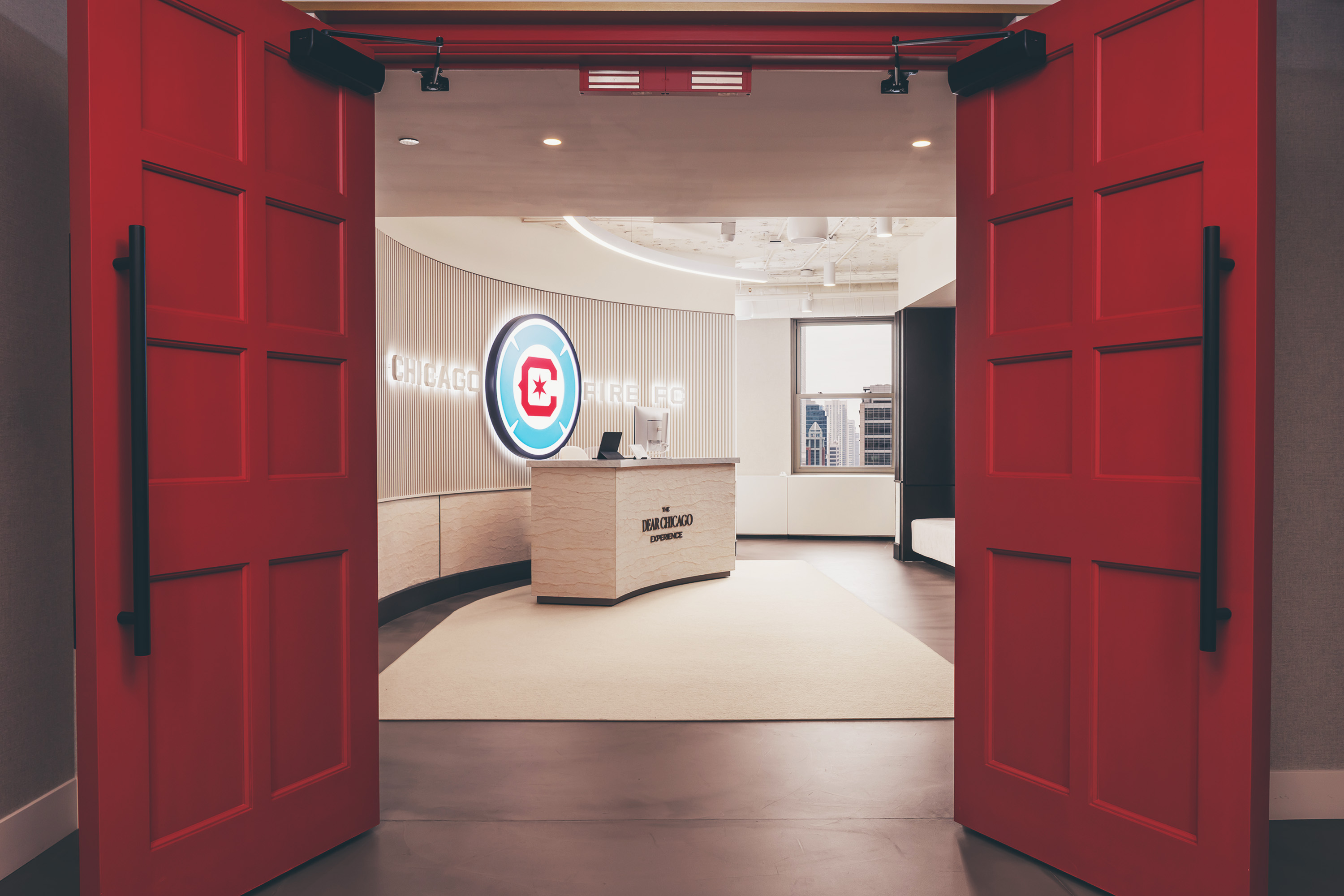
Post-pandemic workplaces need more than a makeover; they need a purpose. Experiential design not only reveals and elevates a business’ core purpose—it creates the places and conditions for humans to connect with that purpose and with each other.
Great storytelling works because it invites us to become part of something bigger and feel a sense of belonging. Taylor Swift’s fans aren’t just buying a ticket to a concert—they’re becoming part of a global community. And that’s worth way more than the price of admission.
3. Borrow from "third places"
We go to coffee shops, bars, parks, and squares to feel energized, experience chance encounters, and reconnect with people outside home and work. Large companies are drawing inspiration from these spaces to design workplaces that bring people together more casually, blurring the line between the outside and the inside.
“In the same way biophilic design in the workplace seeks to meet our need to be close to nature, the emulation of third spaces seeks to enrich workplaces with the same social dynamics we find in the outside world.” - David Waingarten, Creative Director of Strategy
What's your ____________ + ____________?
To create experiential spaces and accommodate employees’ shifting needs, workplace designers should brainstorm two places to mix. Office and coffee shop? Conference room and laboratory?
Not every combination will work, but bringing seemingly unrelated ideas together can add value, spark inspiration, and foster greater productivity and collaboration across workforces.
Read David's full article in Work Design Magazine.
David Waingarten, Creative Director of Strategy
More about David Waingarten, Creative Director of Strategy

David has 20+ years of experience directing interactive and immersive story-driven experiences for global brands and cultural clients—from concept to delivery. He is passionate about finding and expressing the heart of a project, setting its creative vision, and leading teams to execute it at the highest level possible.
Follow David on LinkedIn.